with:
Thérèse Bolliger, Anja Braun, Lara and Noa Castro Lema, Pia-Rosa Dobrowitz, Dorota Gawęda and Eglė Kulbokaitė, Charlotte Horn, Simon Krebs, Tim Kummer, Céline Lachkar, Lena Laguna Diel, Maude Léonard-Contant, Manuela Libertad Morales Délano, Lisa Mazenauer, Jorge Morocho, Katrin Niedermeier, Ulrich Okujeni, Lou-Anne Pommé, Margherita Raso, Marion Ritzmann, Lionne Saluz, Moa Sjöstedt, Julia Steiner, Vital Z’Brun
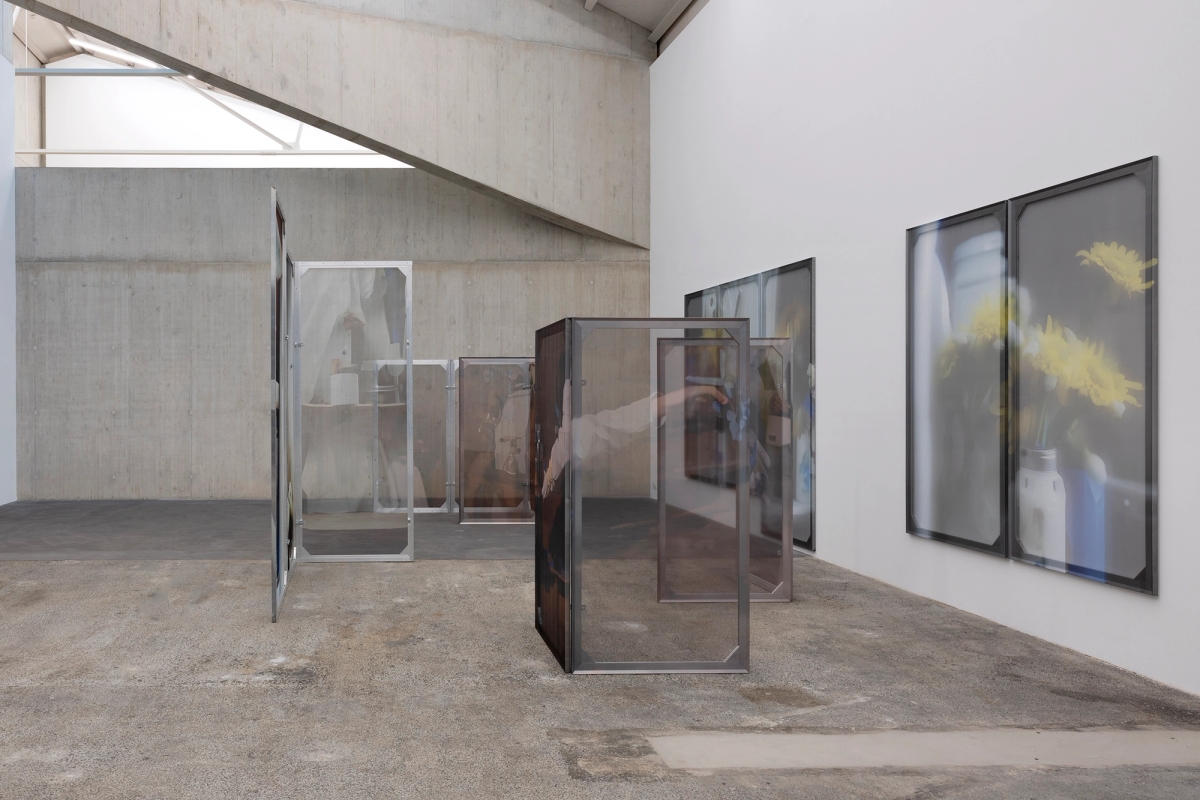
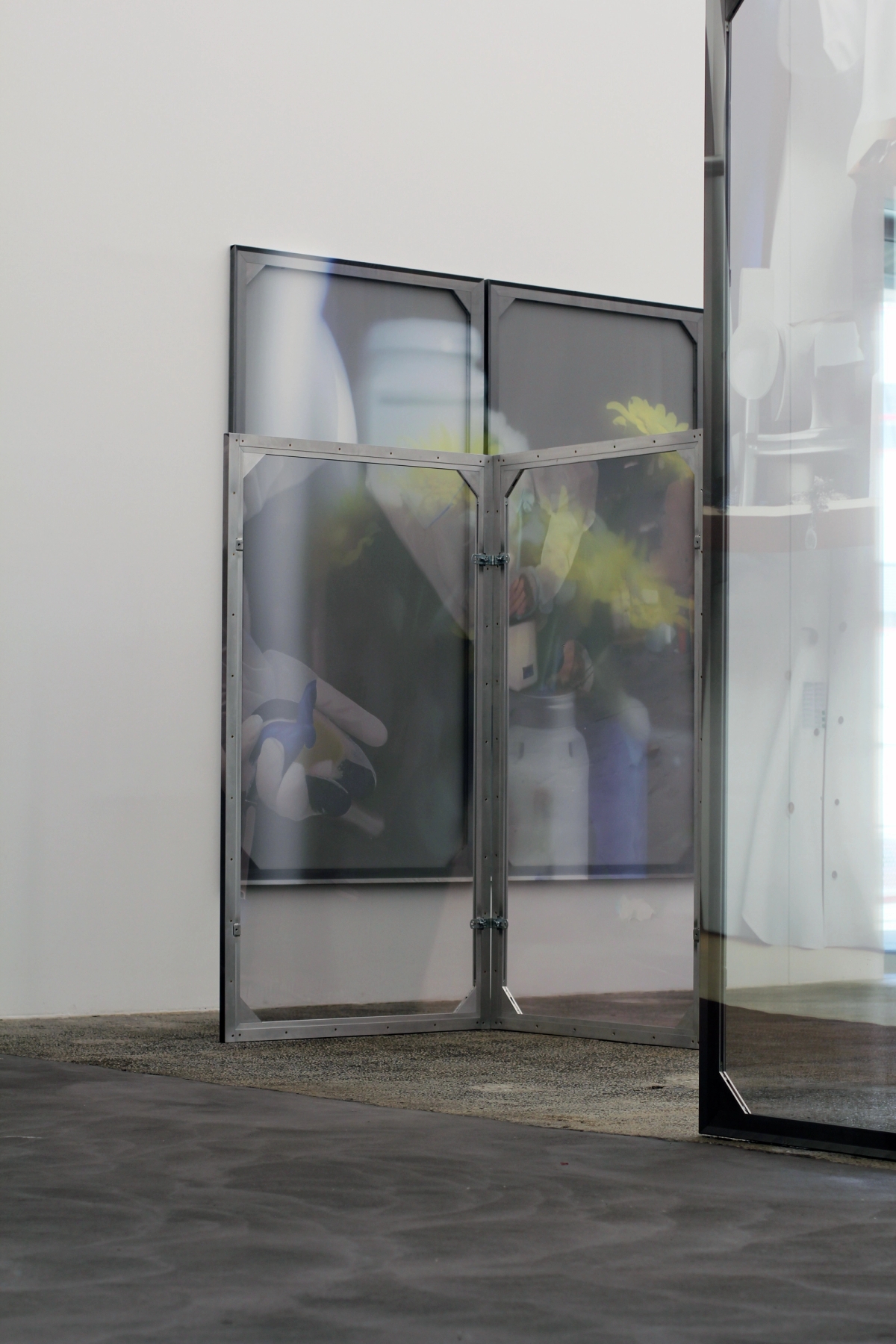
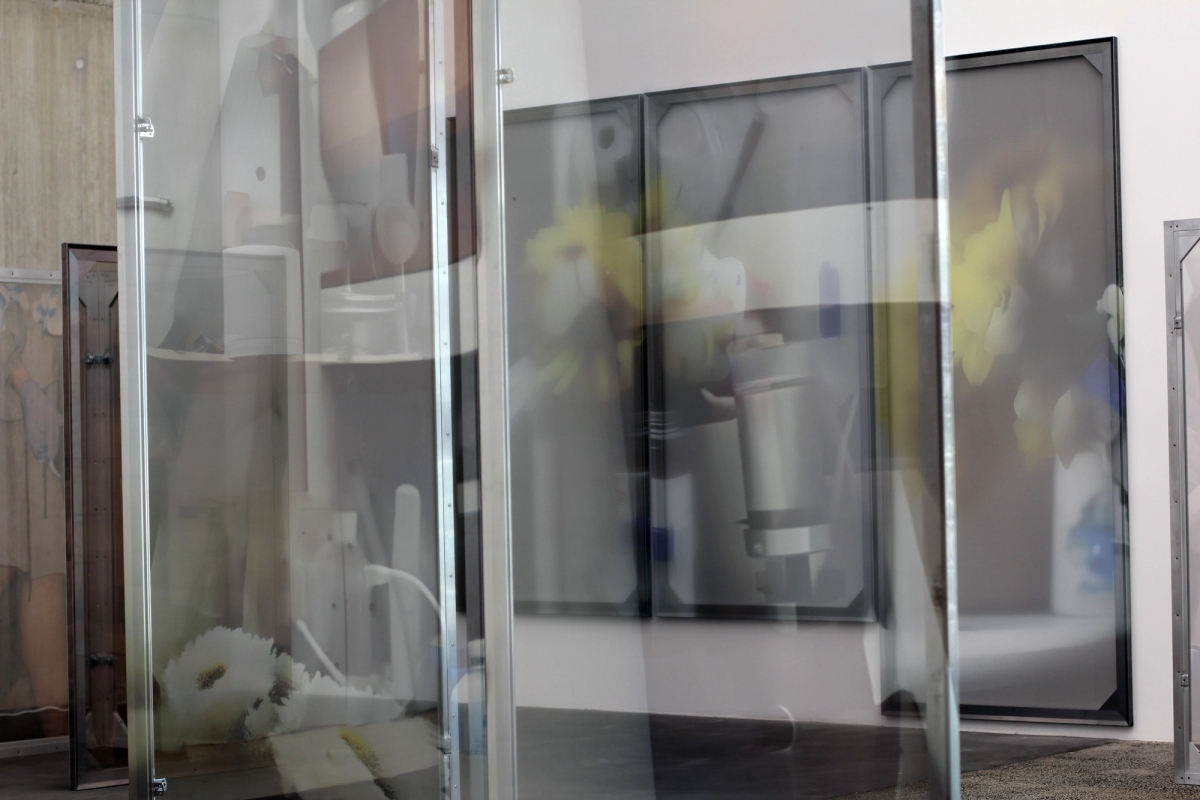
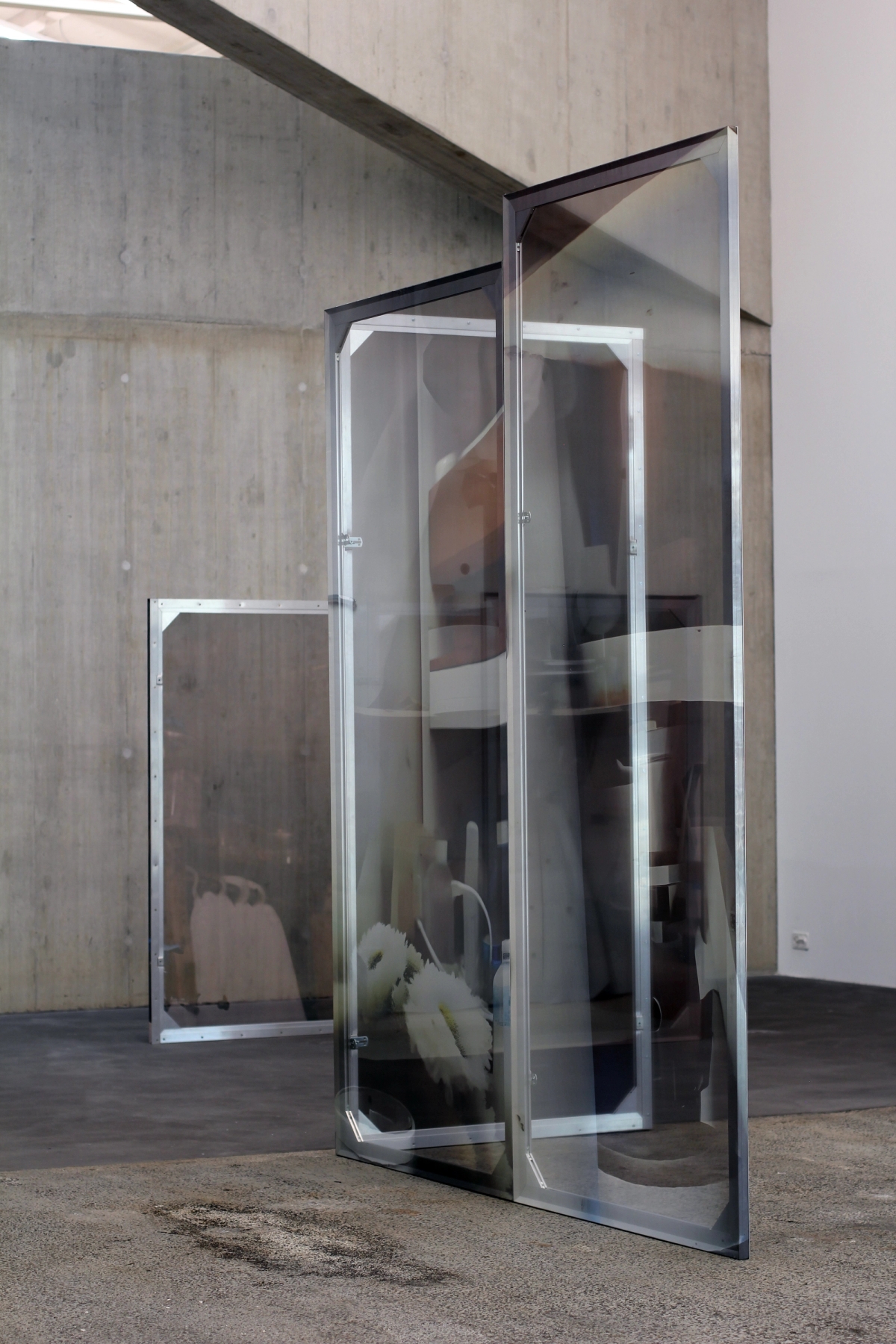
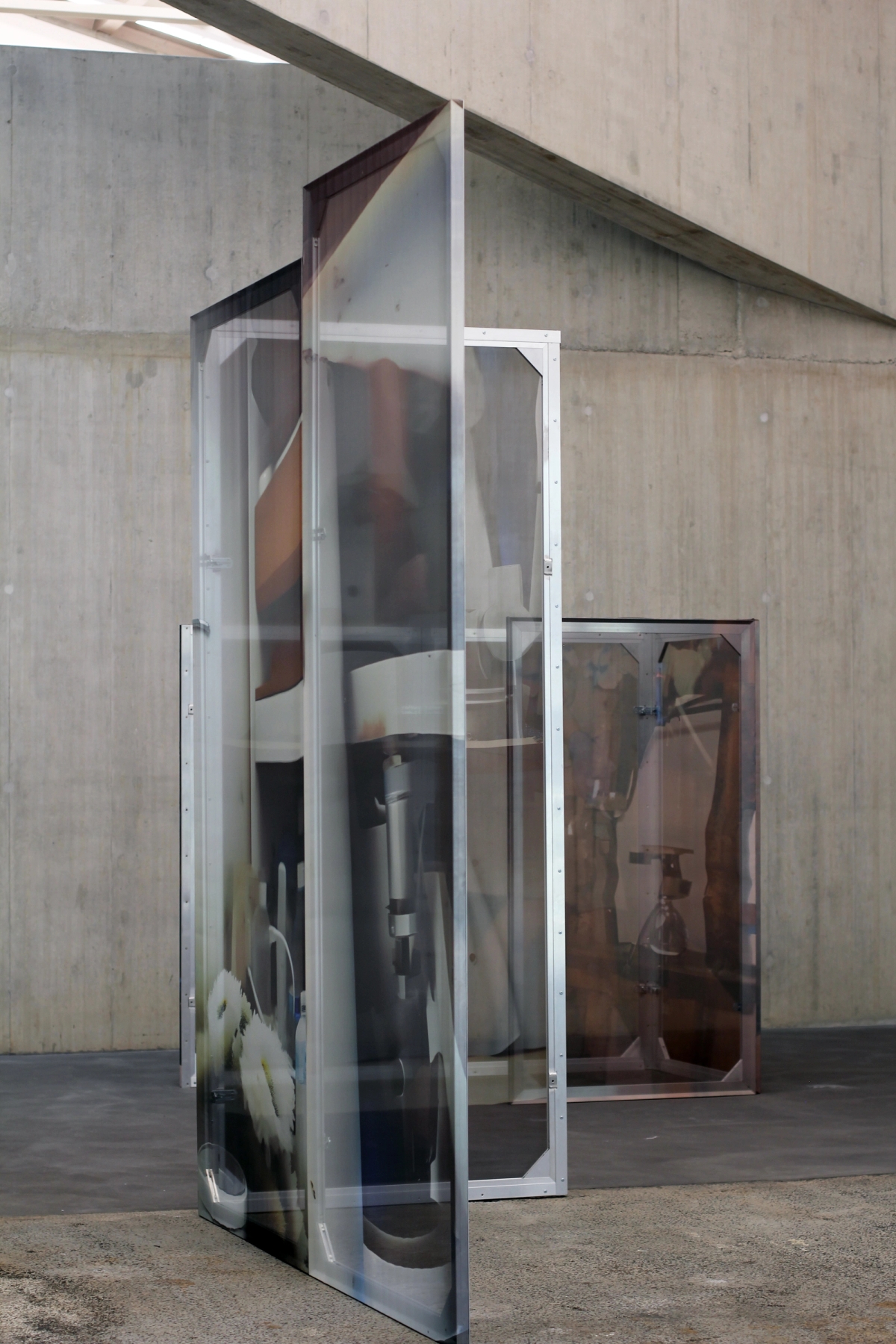
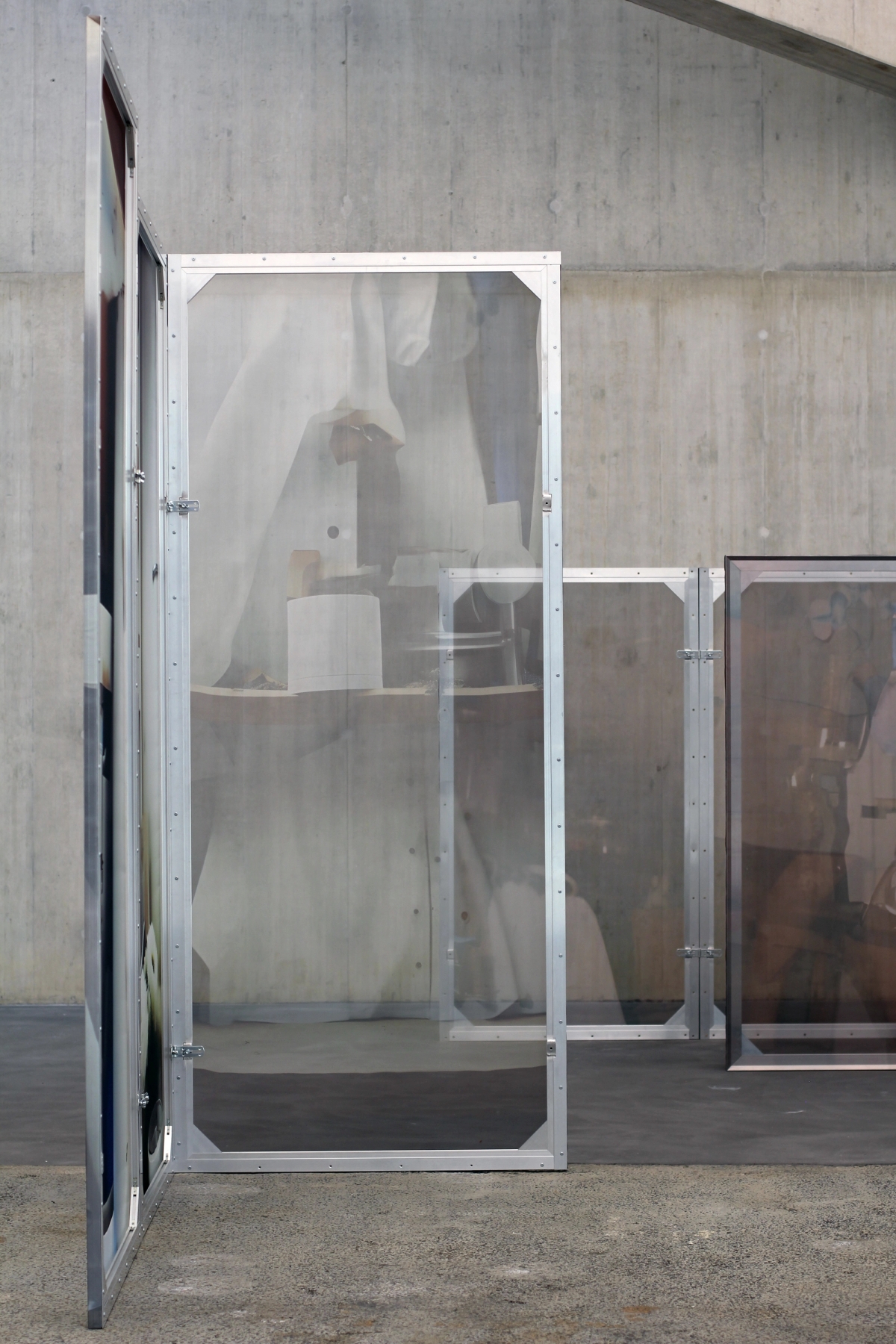
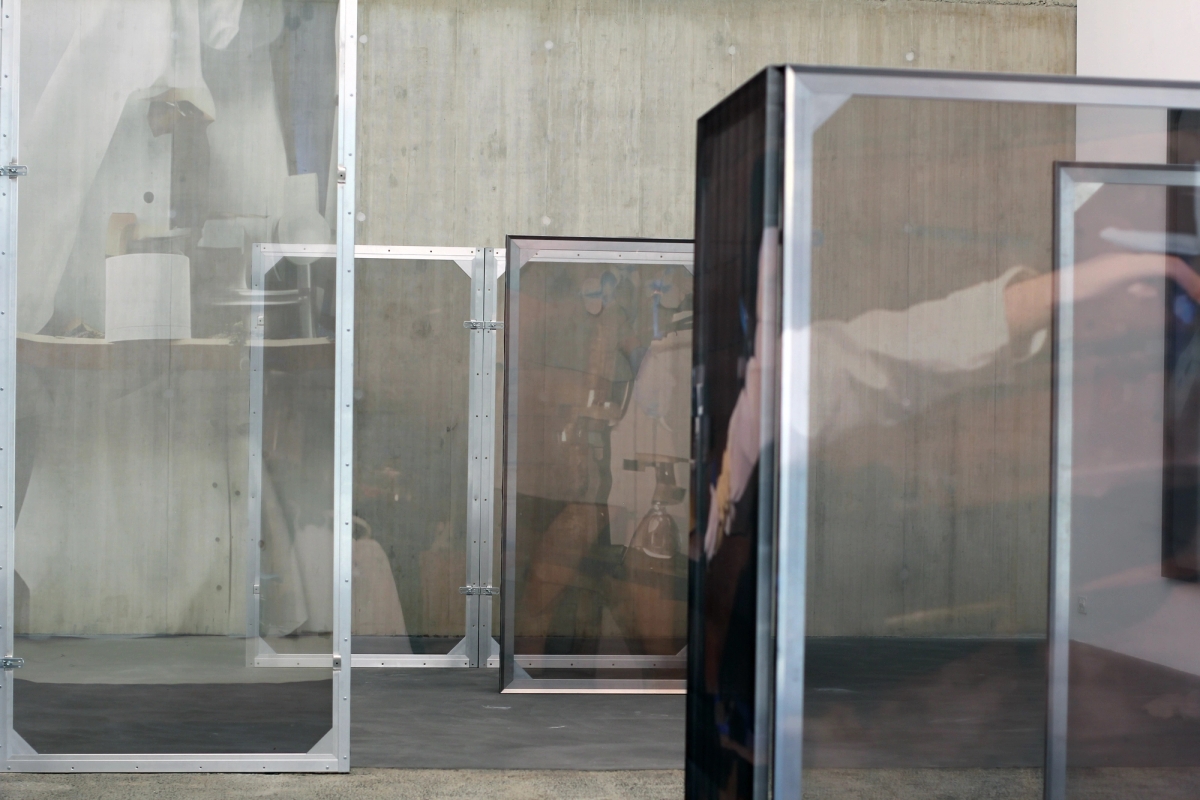
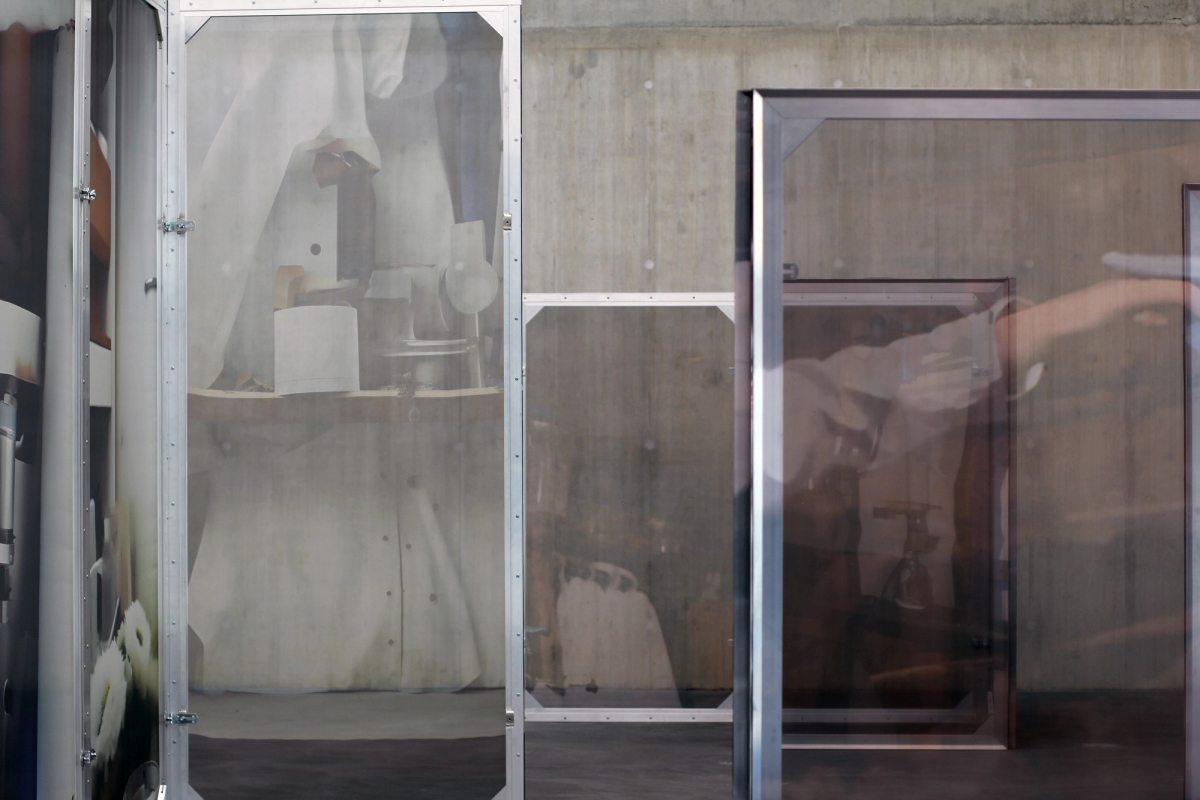
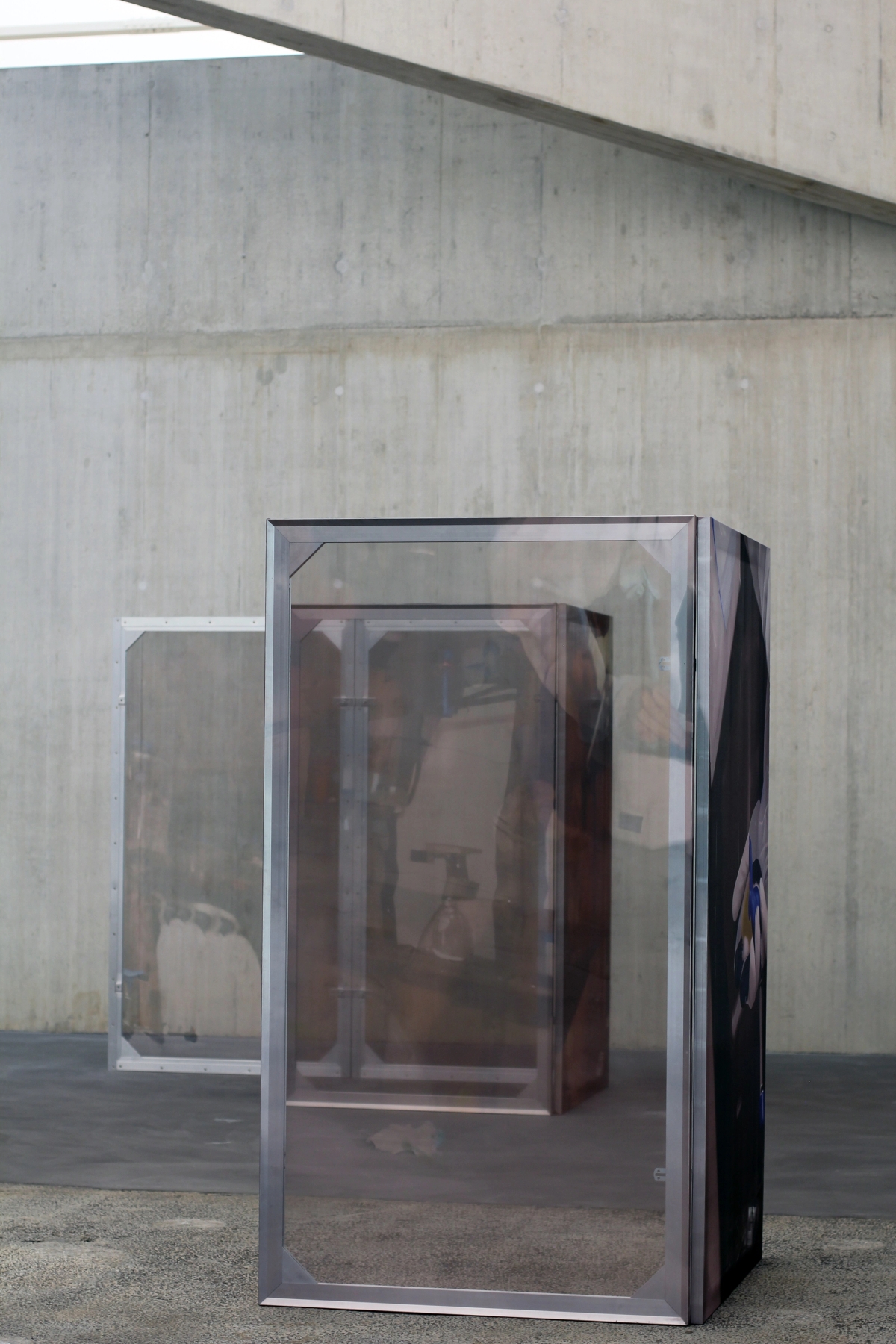
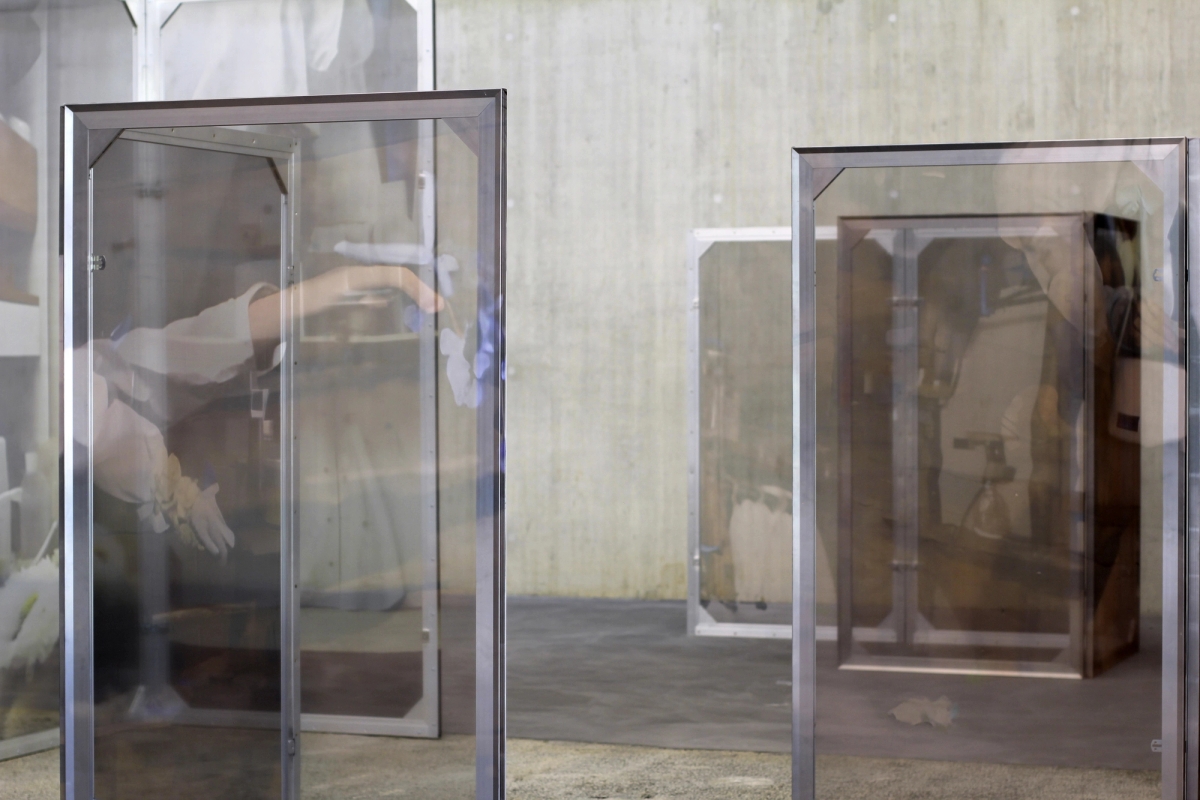
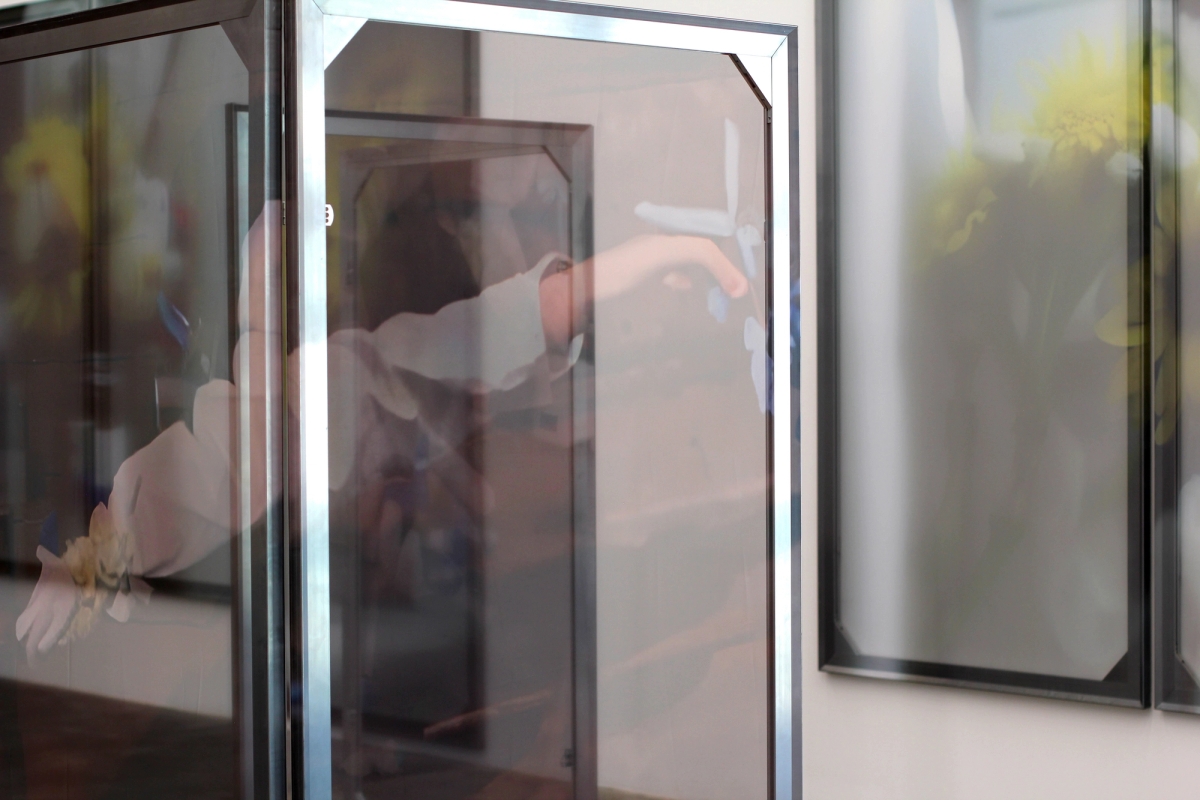
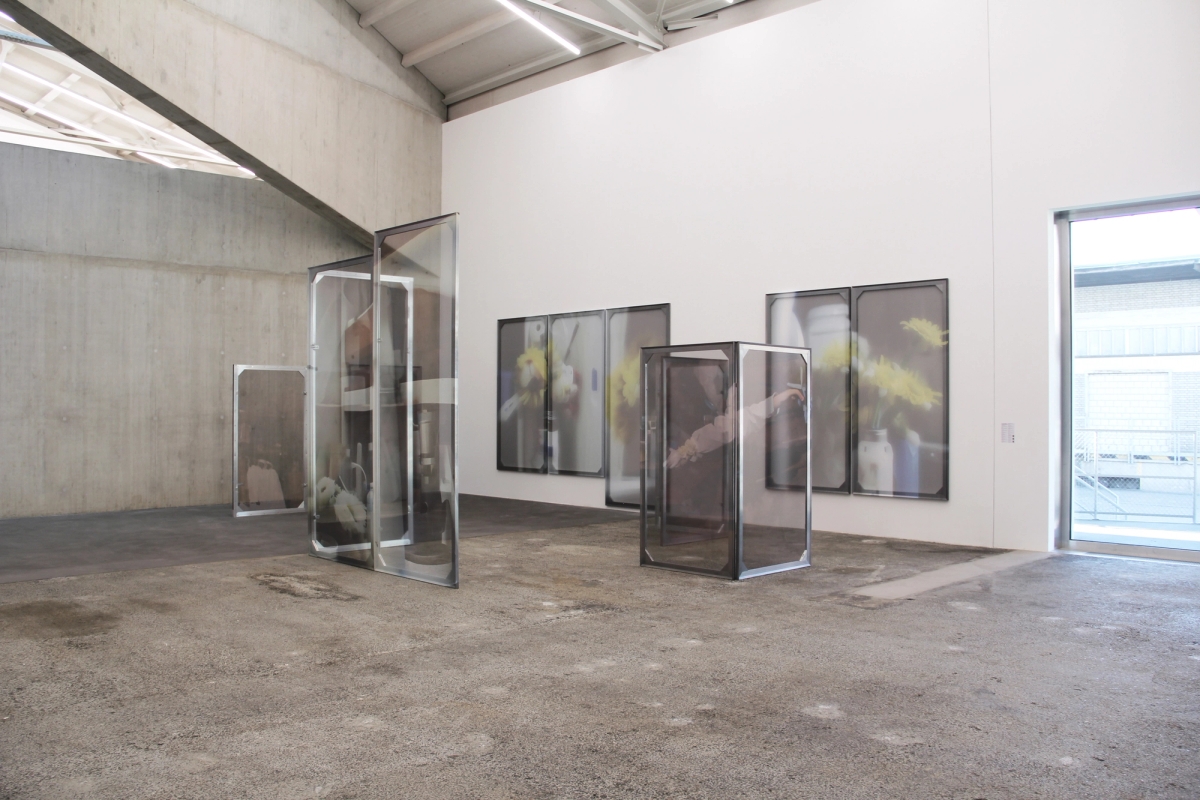
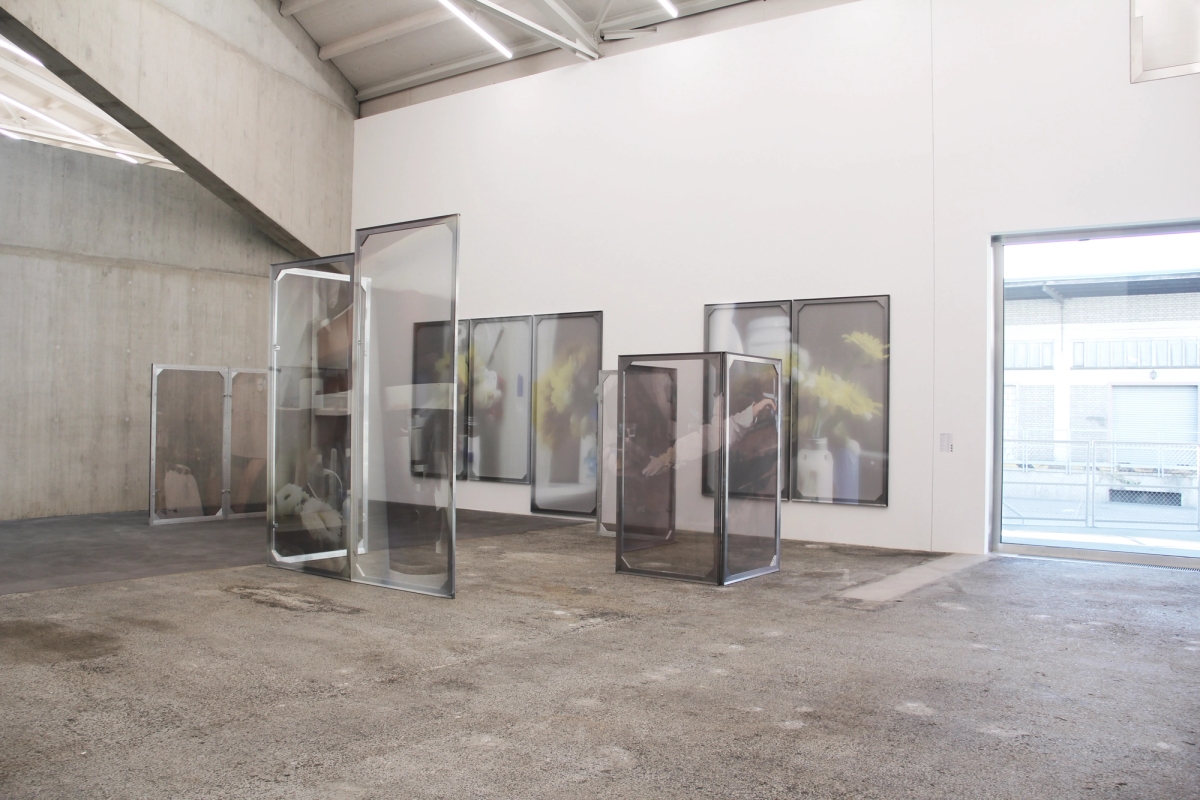
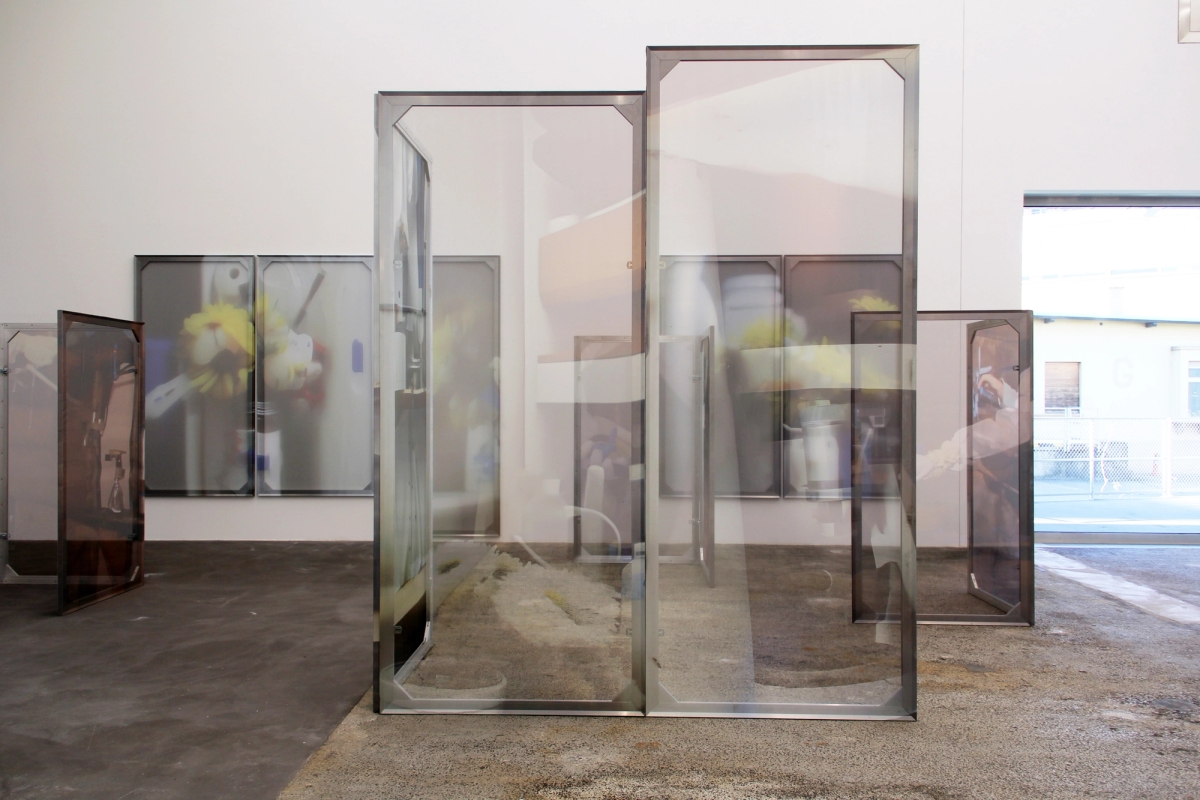
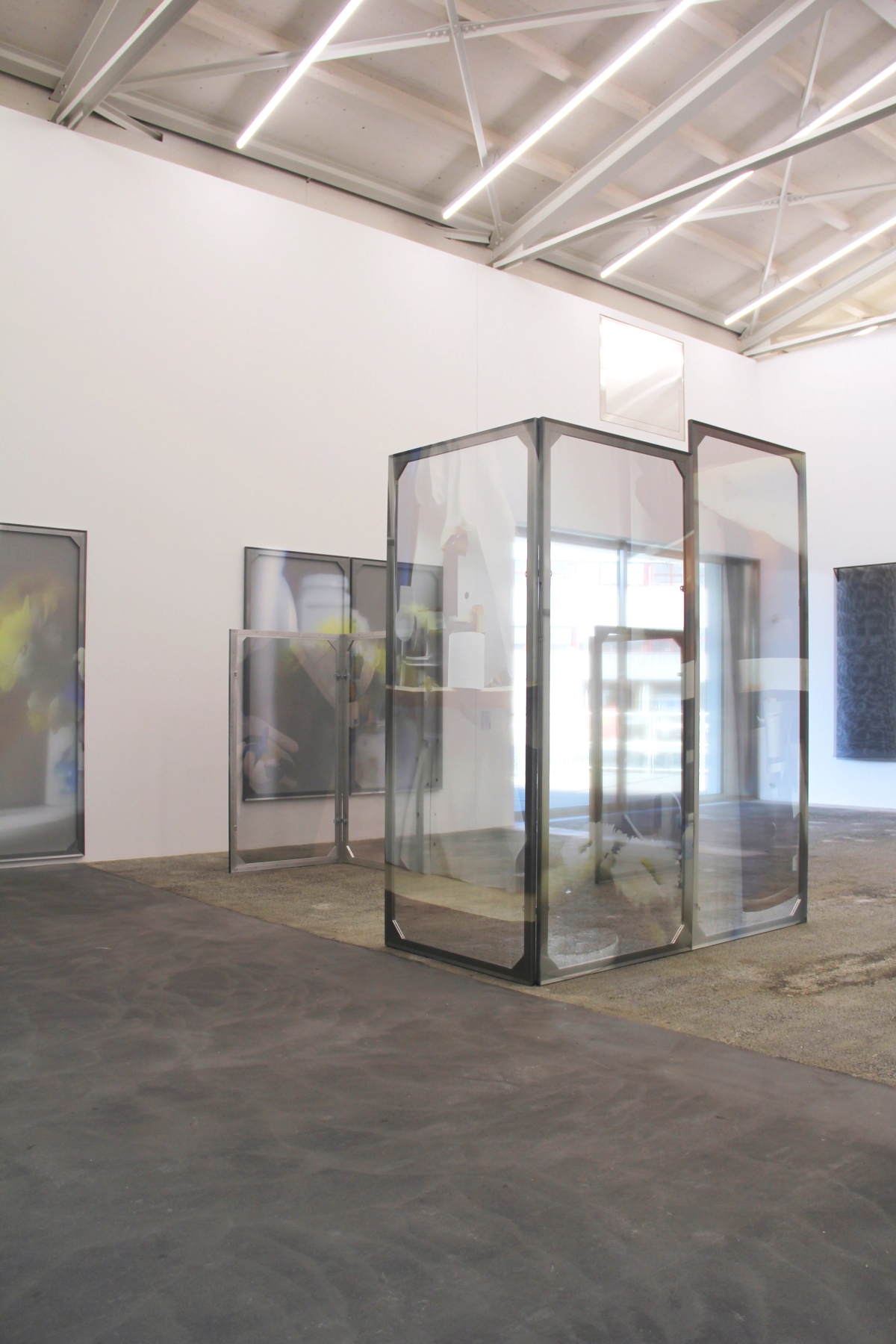
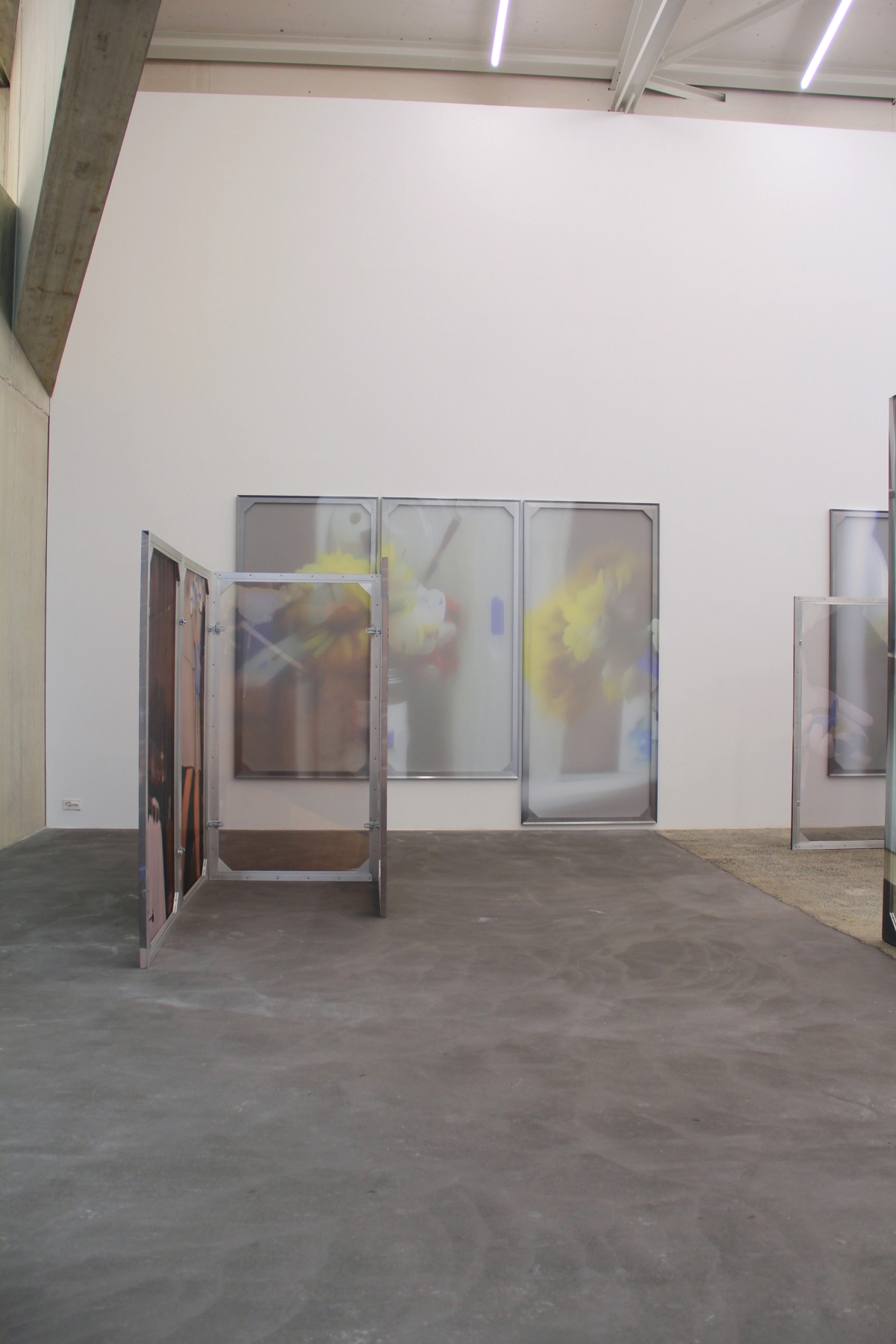
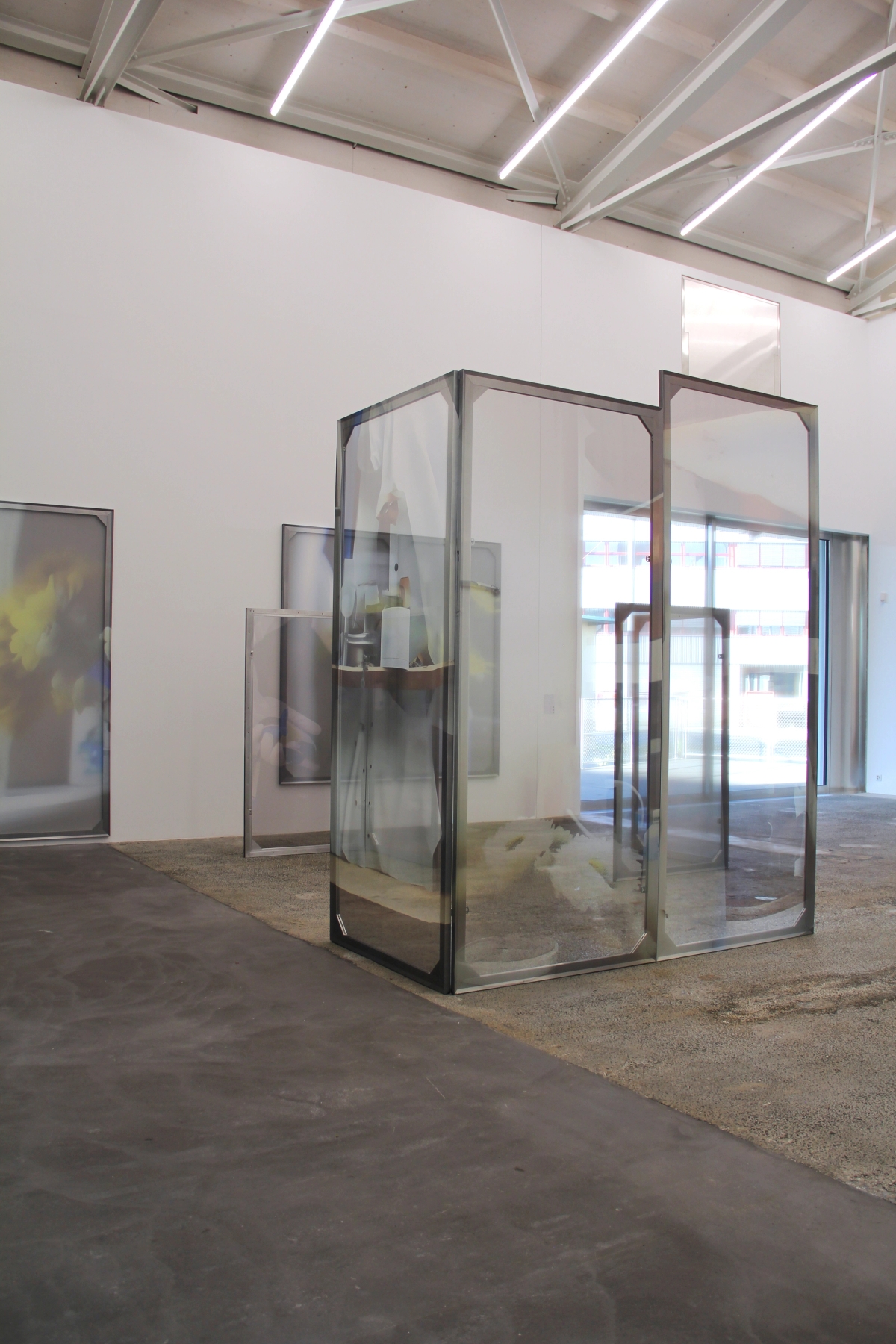
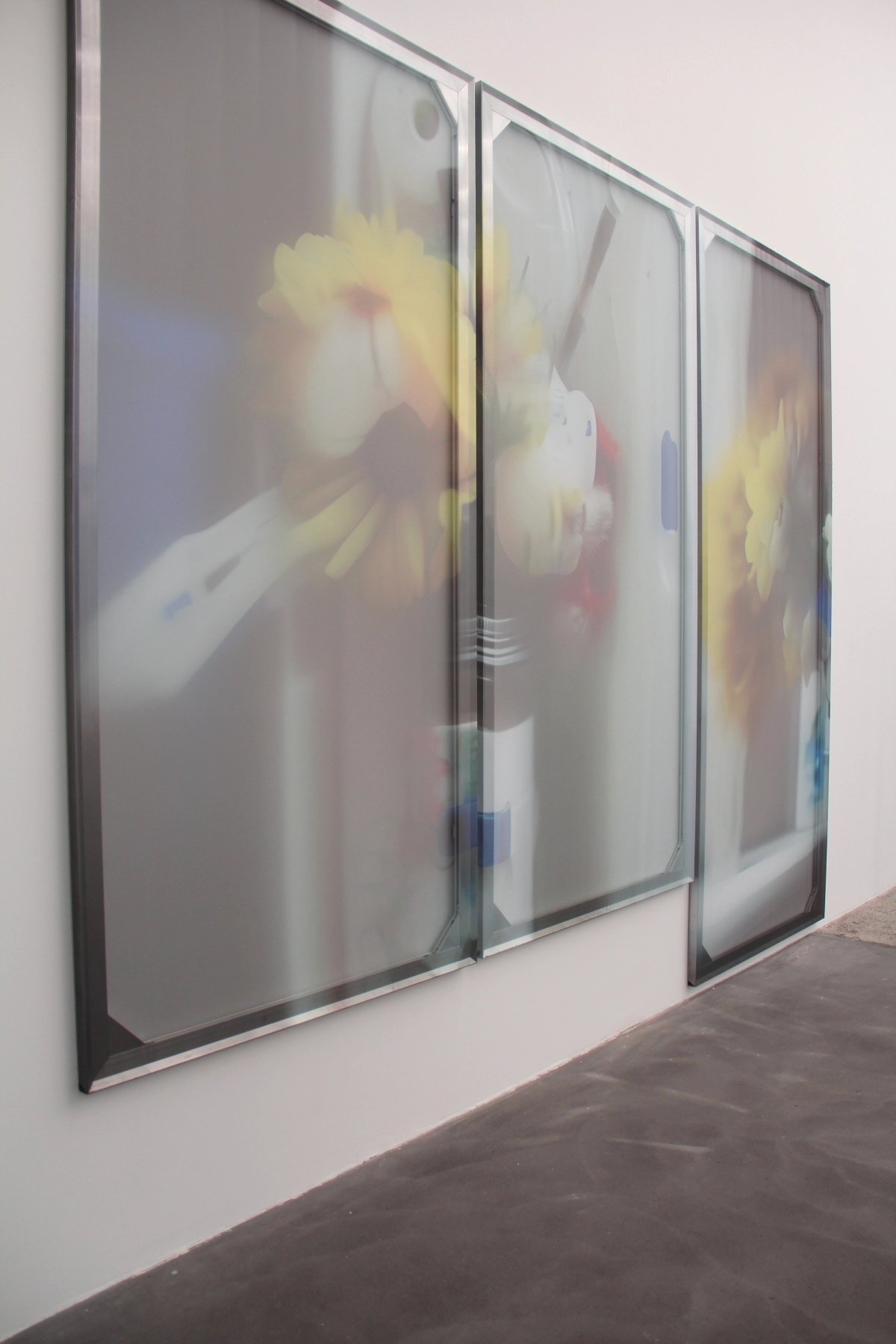
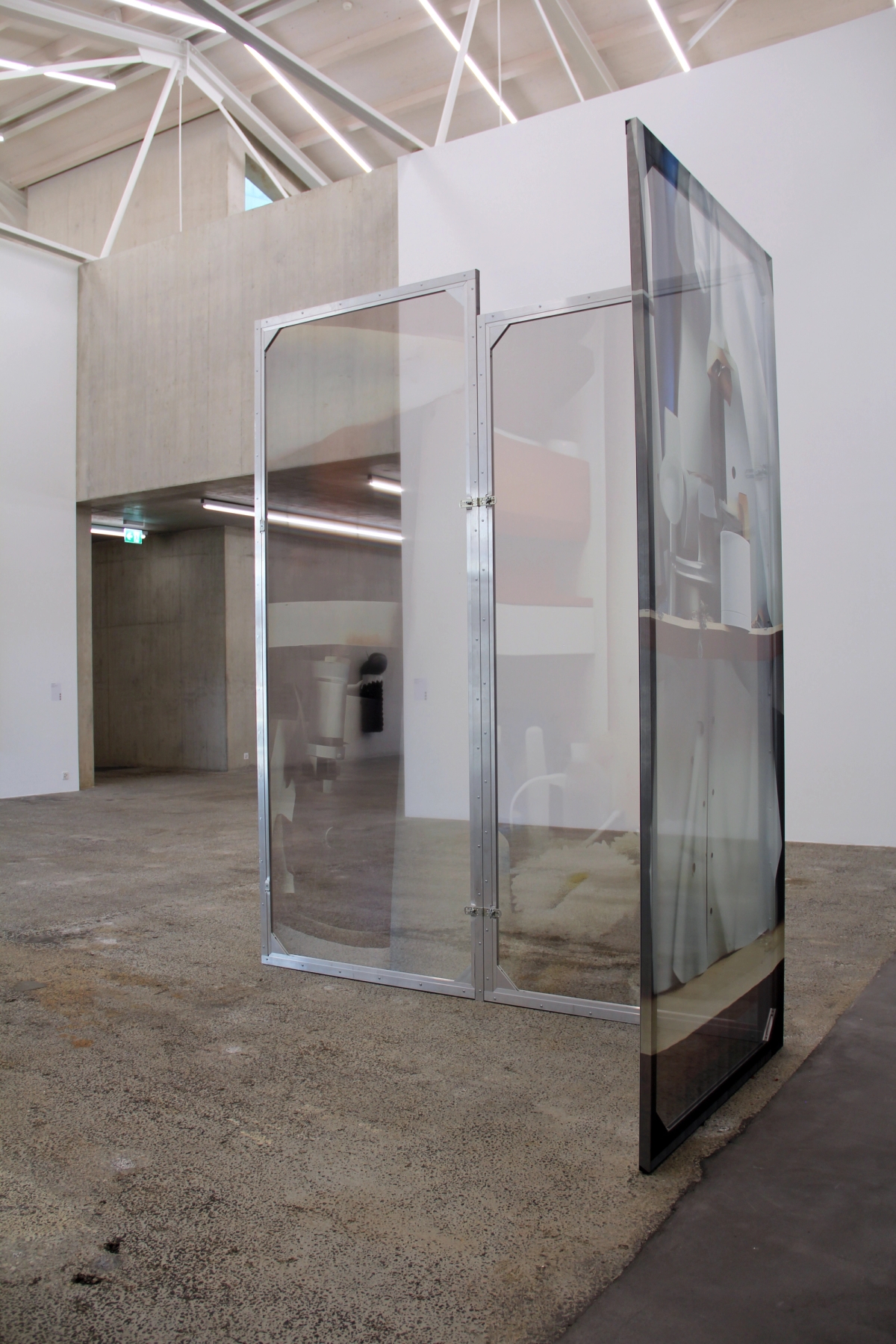
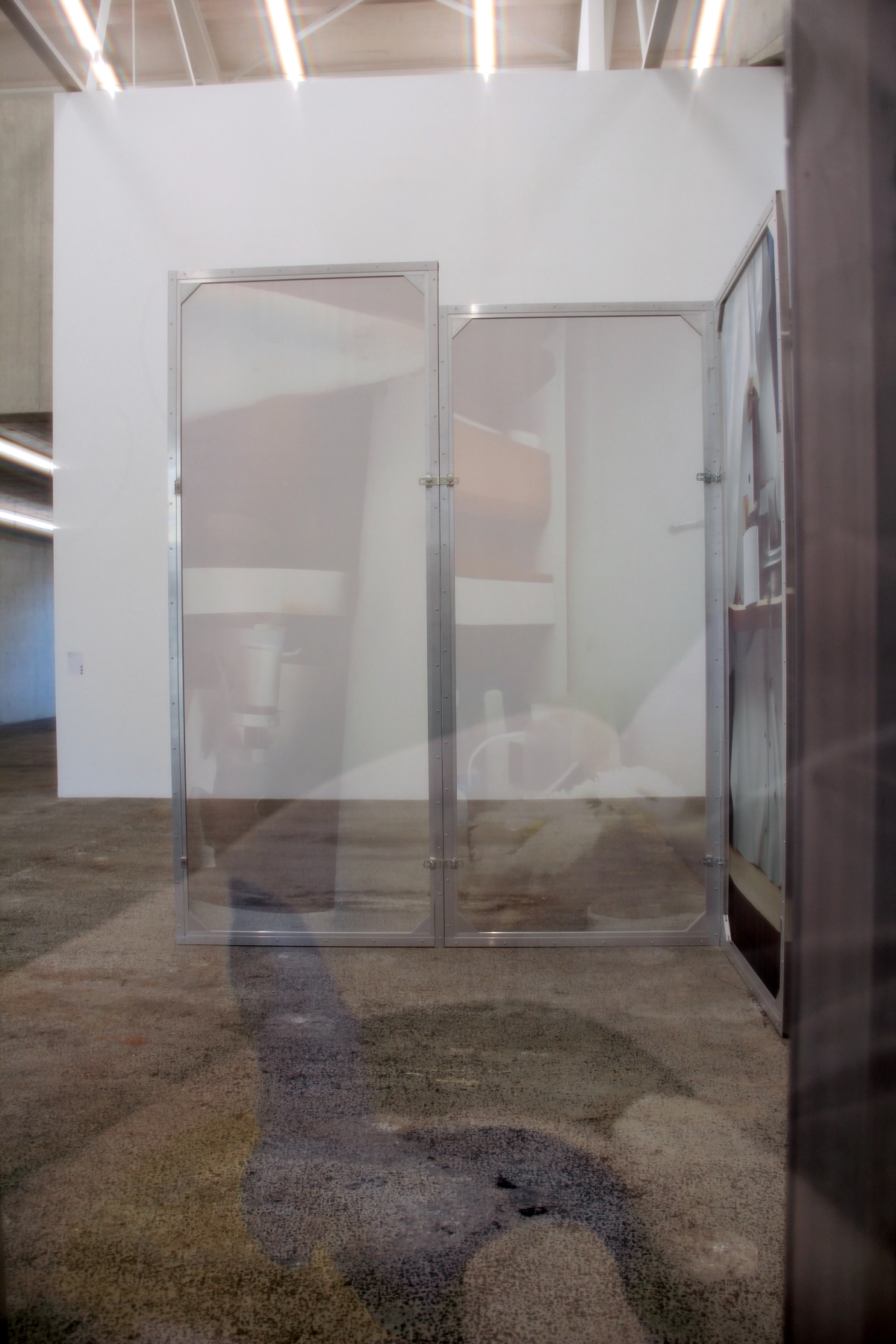
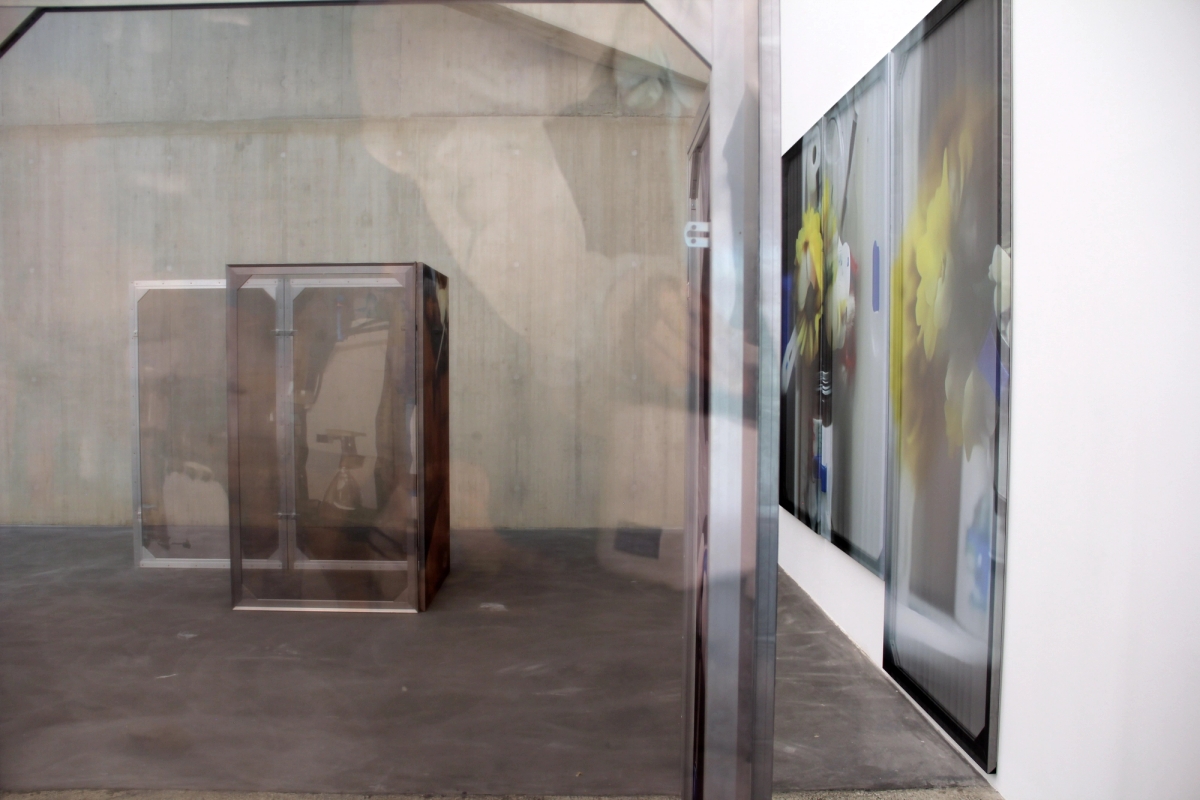
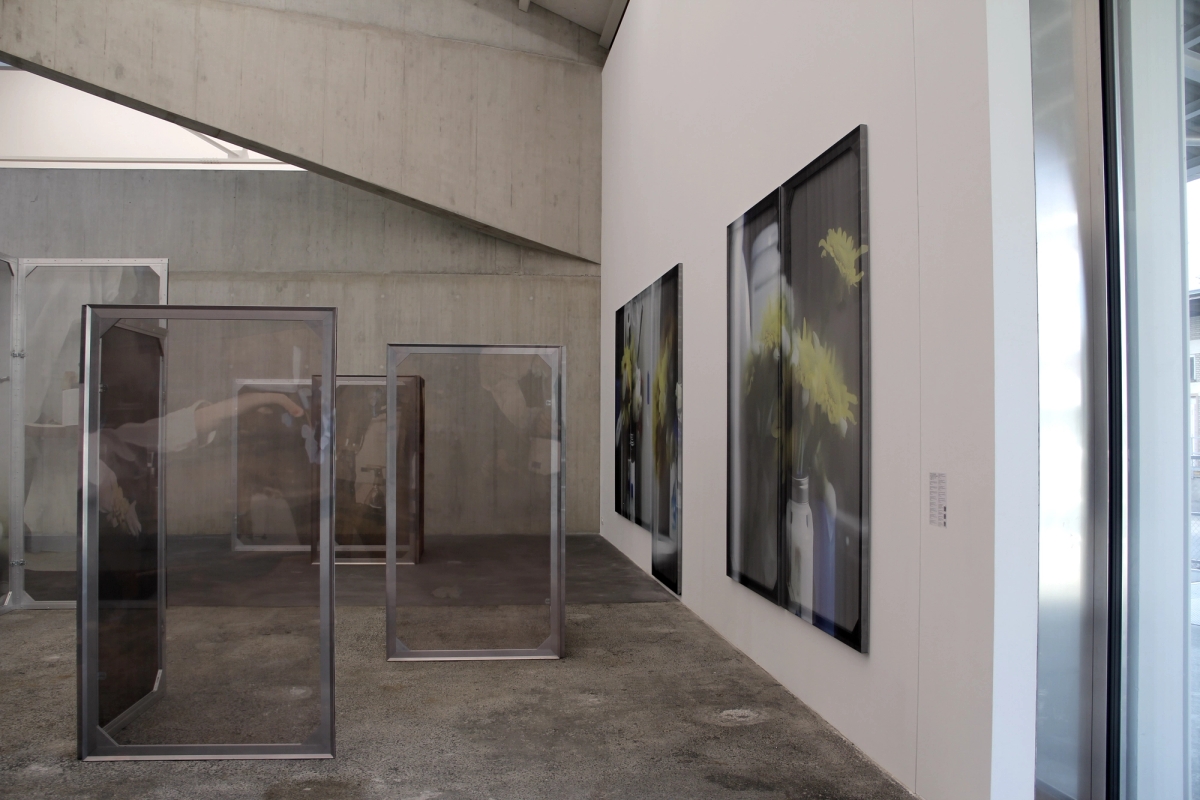
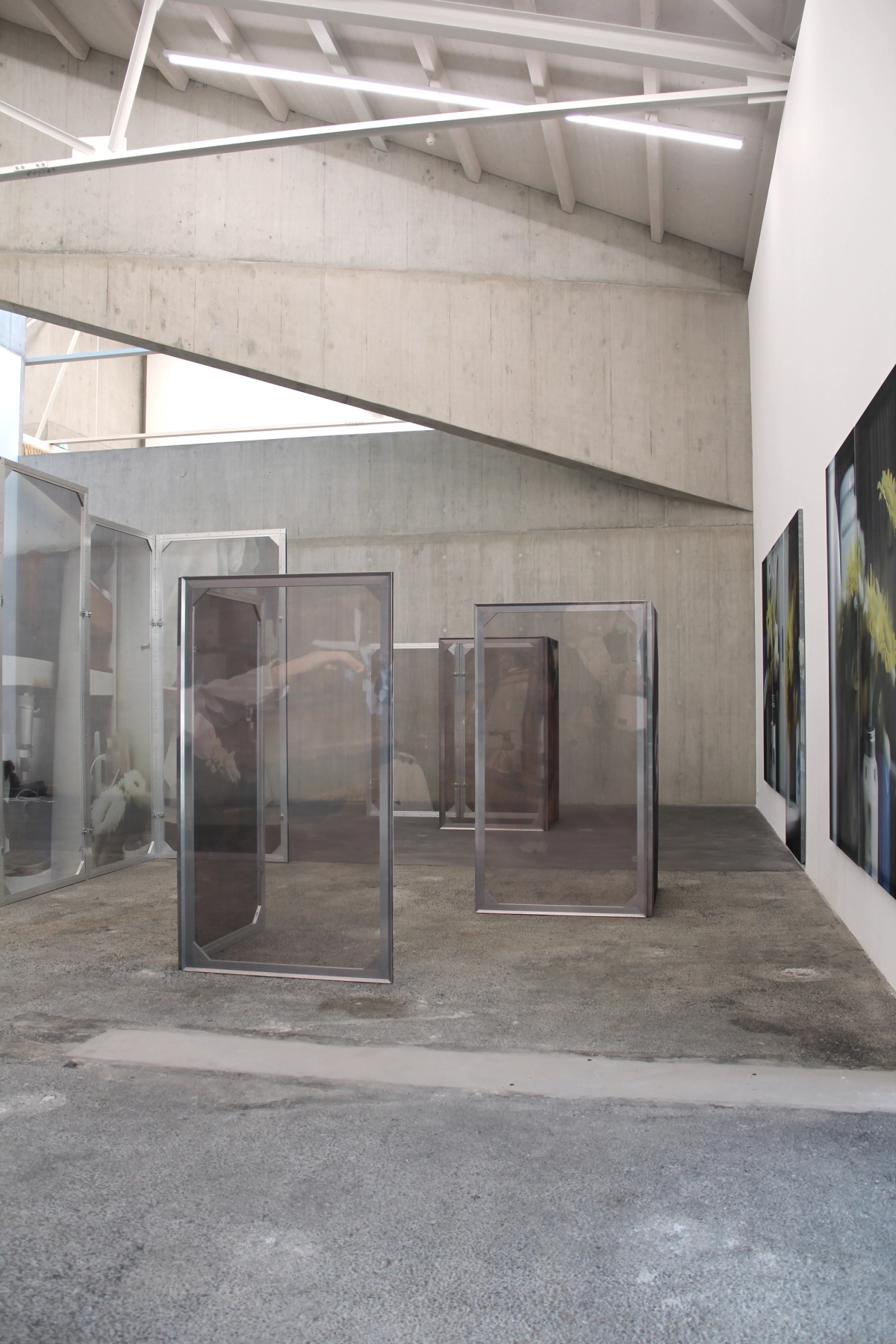
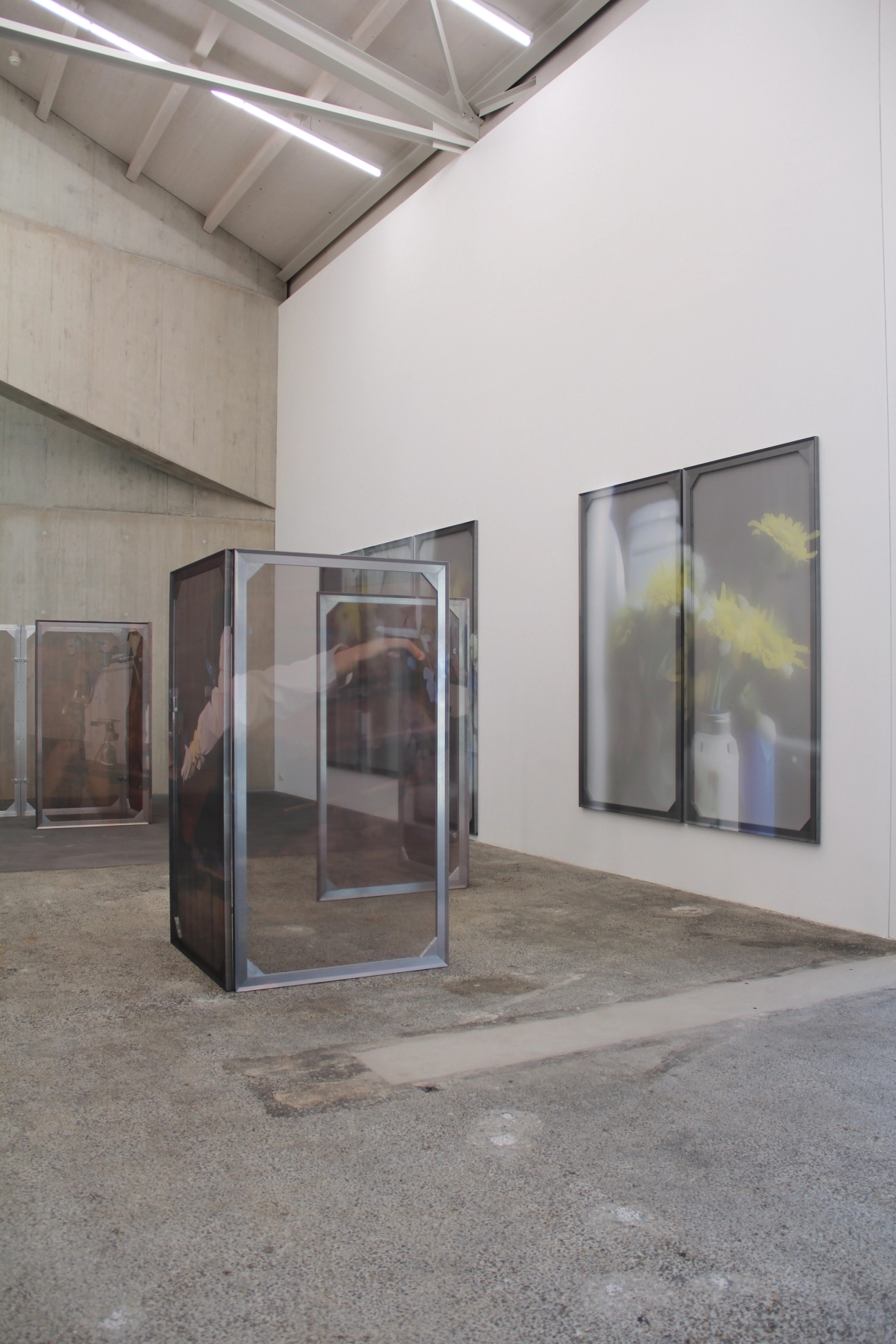
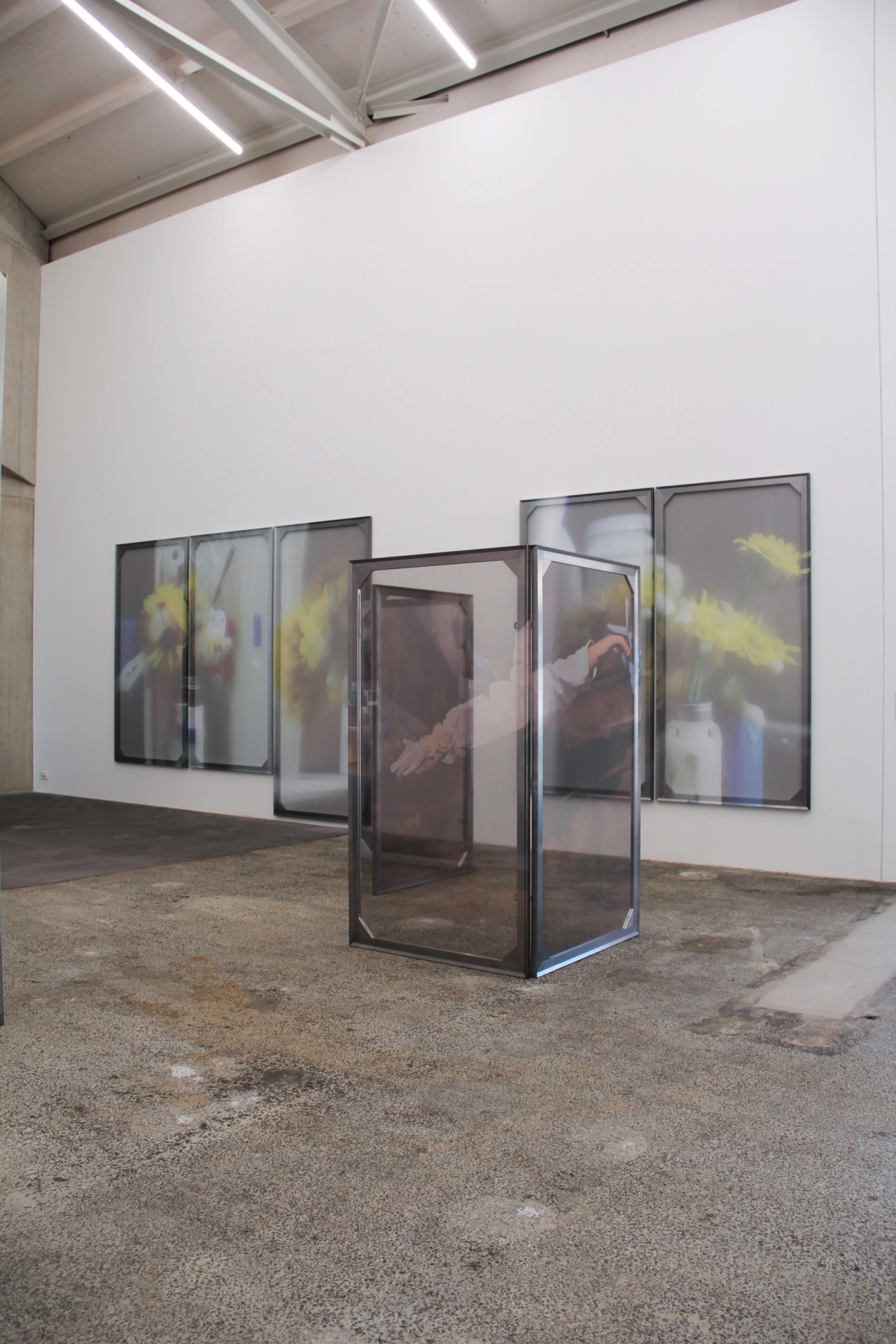
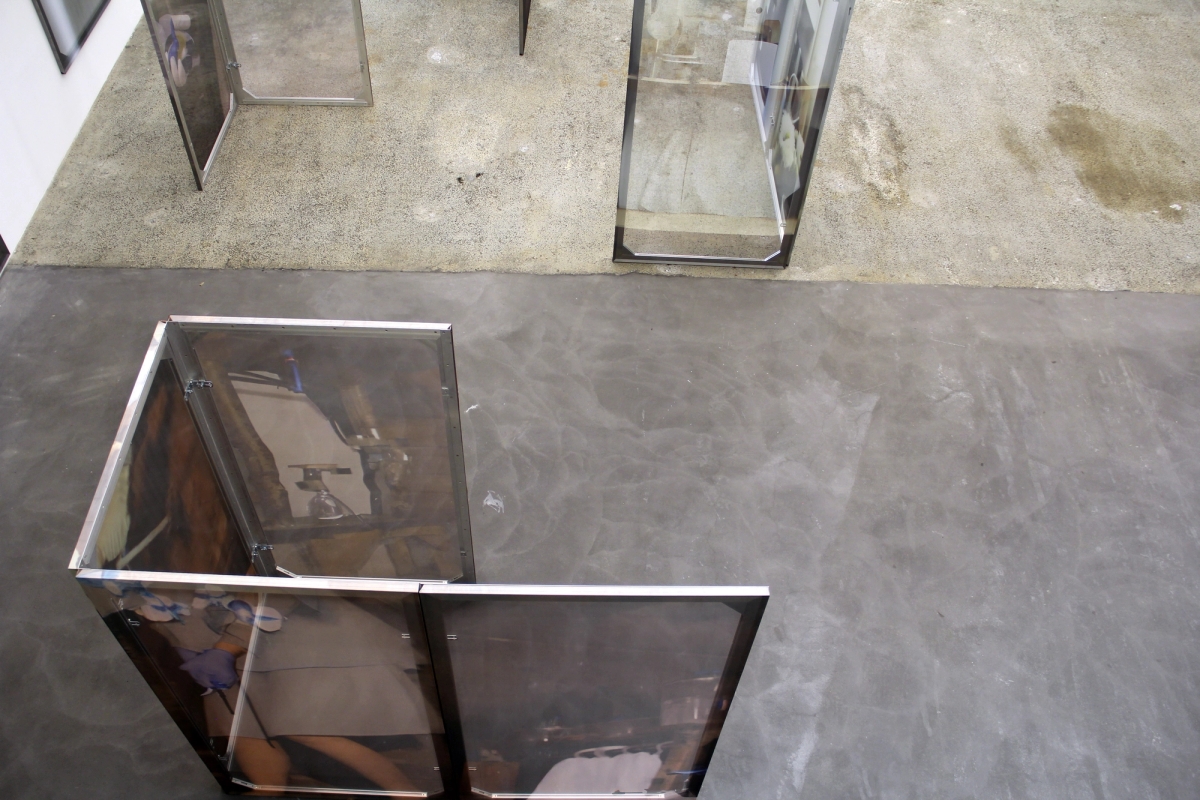
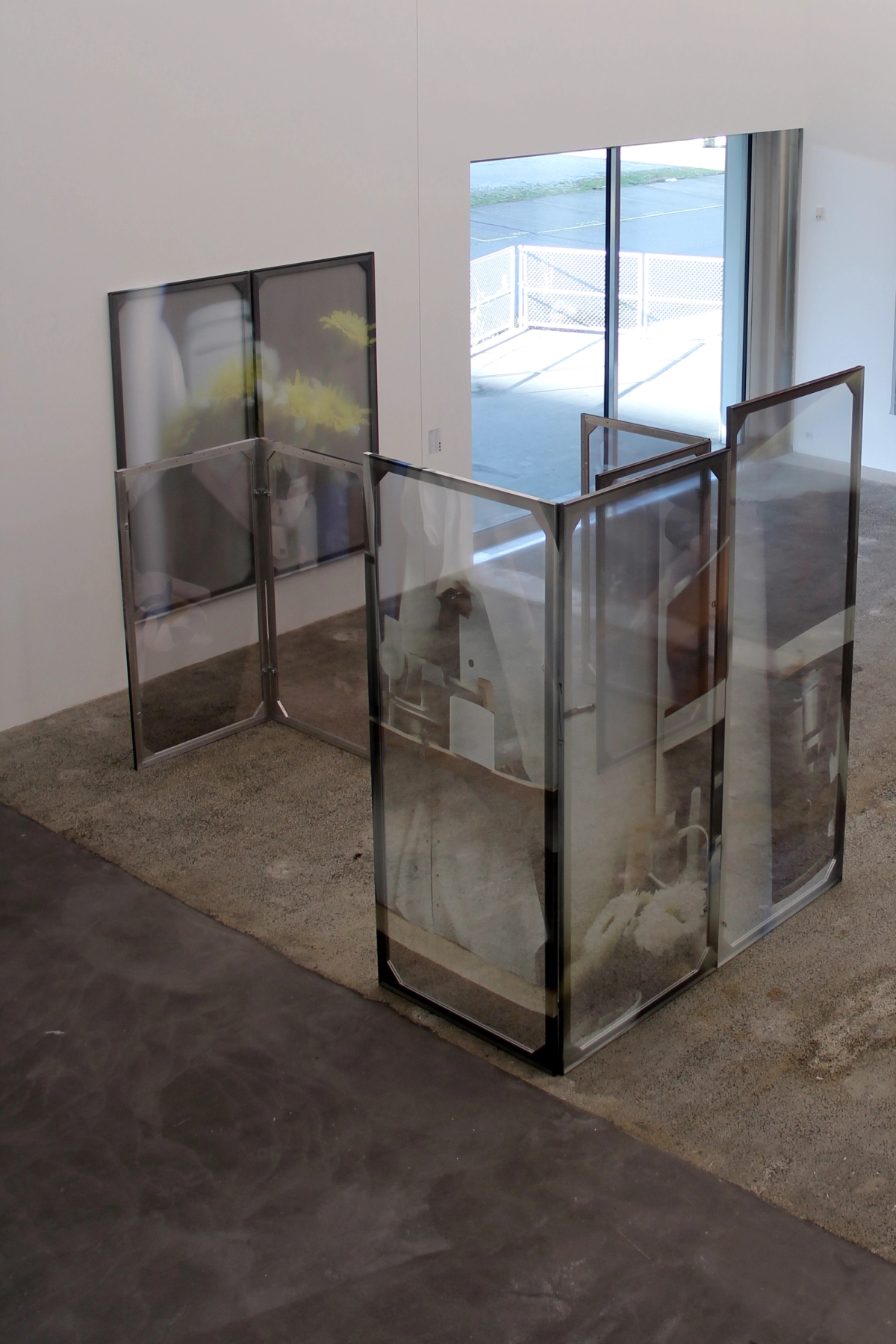
The Enclosure Series (2023/24) which refer to processes of land privatization, divide the exhibition space and restrict visitors’ movements while also creating new, intimate spaces. The boundaries are both rigid and ephemeral. The translucency of the membrane-like chiffon textiles contrasts with the aluminum borders of the modular image carriers. Overlapping, hybrid images are created: motifs of botanical chimeras encounter a reinterpreted scene from Pier Paolo Pasolini’s Il Decamerone as well as the algorithmically altered documentation of the duo’s -lalia performance (2020). The figure of the lying narrator, who finds redemption through his powers of persuasion, and the witch Poludnica from Slavic folklore are both queered[1] and situated in a digital context. If you look directly at the semi-transparent image, it seems permeable. The work is only activated by the viewer’s movements. By increasing or decreasing the saturation of the chiffon textile prints, depending on where the viewer is standing, the artists distance themselves from a linear view of art. In the context of The Enclosure Series, seeing becomes an embodied practice that cannot be detached from other sensory perceptions. This multisensory artistic experience is typical of the work of the artist duo. In their practice, which spans performance, sculpture, video installation, and olfactory works, they are constantly searching for new forms of expression in order to challenge established viewing traditions.